Understanding What 179D Actually Covers
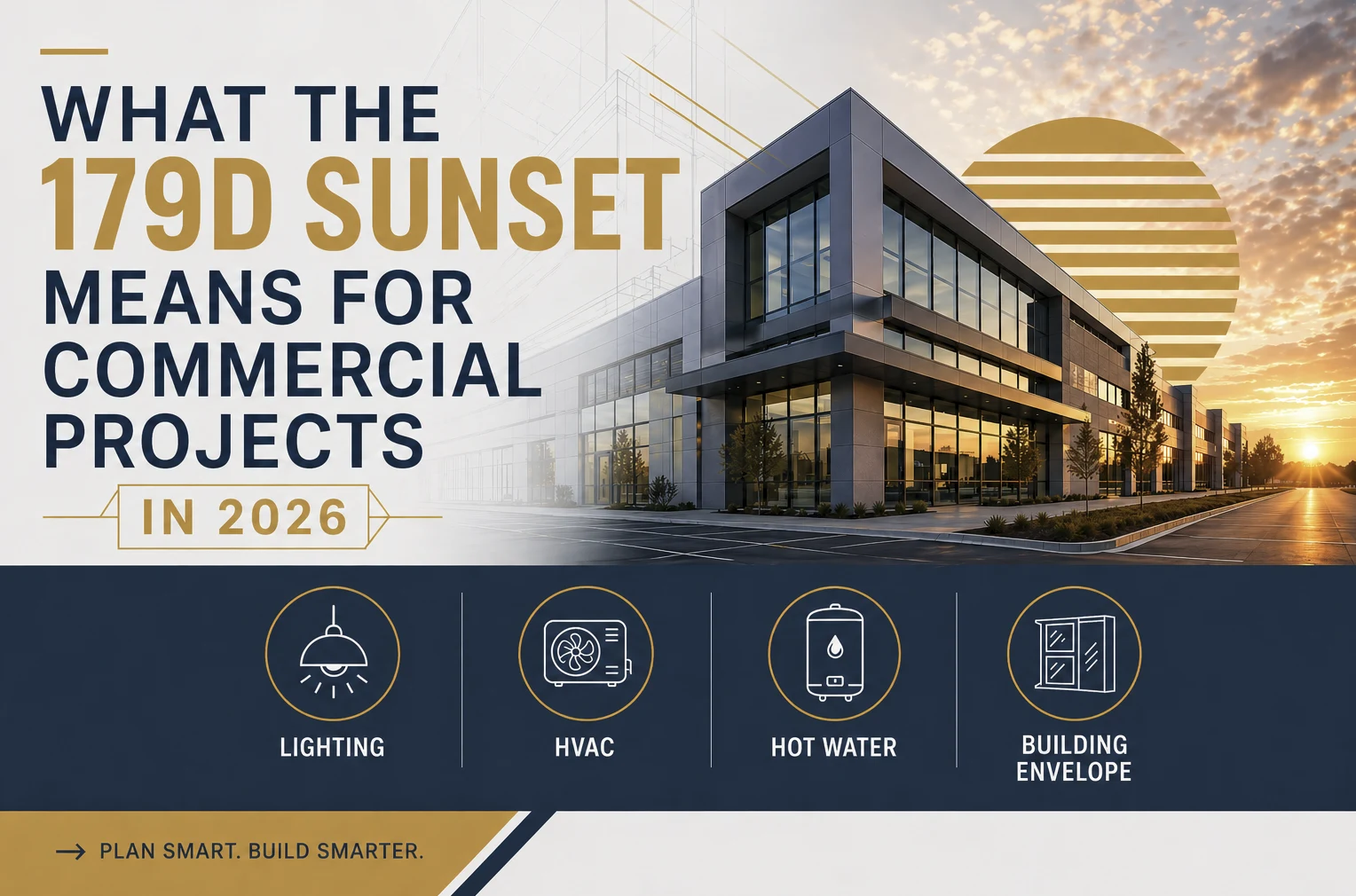
Section 179D is a federal tax deduction tied to certain energy-efficient improvements in commercial buildings. In practice, that means qualifying work on systems like lighting, HVAC, hot water, and the building envelope may carry tax value in addition to operational value.
Why This Year Is Different
That is what makes 179D worth talking about in 2026, even as the deduction moves toward sunset. This is no longer just a general conversation about energy-efficient construction incentives. It is a timing conversation.
The June 2026 Cutoff
At Danto Builders, we think owners should understand that shift clearly. The IRS and the U.S. Department of Energy have both said that 179D will not apply to property whose construction begins after June 30, 2026. For commercial owners, developers, and project teams already considering system-heavy upgrades or new construction, that deadline changes the stakes. It means 179D may still matter for projects already moving, but it is not something owners can treat as a standing option forever.
A Shrinking Window for Projects
That is why we would not frame 179D as an evergreen topic right now. The better way to look at it is as a closing-window opportunity. If a project already includes major mechanical upgrades, energy-efficient lighting, envelope improvements, or other qualifying systems, the deduction may still influence the economics of the job. For the right project, that can affect how owners think about scope, return on investment, and timing.
More Than a Post-Project Tax Benefit
What often gets lost in the discussion is that 179D is not just a tax issue that shows up after the project is done. It is tied to the work itself. The systems selected, the documentation created, and the timing of the project all play a role. In other words, the deduction lives inside the project, not outside of it.
Where It Fits Into Project Decisions
That matters because owners are already weighing the cost of upgrades against long-term building performance. If a project includes more efficient lighting, better HVAC performance, or meaningful envelope improvements, the conversation should not stop at utility savings. It should also include whether the work still falls within the window where 179D can add financial value.
Projects and Owners Still in Play
There is still a real audience for that message. Owners of qualified commercial buildings may still be eligible, and designers working on certain tax-exempt buildings may also still benefit where the rules allow. That keeps the topic relevant for commercial renovations, public-sector work, institutional projects, and energy-focused building upgrades that are already in play.
Our Take at Danto Builders
At Danto Builders, our view is simple: 179D still matters in 2026. Owners may still have time to benefit before the deadline closes.
What to Consider Before the Deadline
If a commercial project is already in motion and includes qualifying energy-efficient systems, 179D is still worth evaluating now. After June 30, 2026, the conversation changes. Until then, owners who understand the window clearly are in a better position to make smart decisions about the work already on the table.
About Danto Builders, Fort Lauderdale General Contractors
Danto Builders is a premier general contracting firm based in Fort Lauderdale, specializing in both residential and commercial construction. With decades of experience serving South Florida, we pride ourselves on delivering exceptional craftsmanship, transparent communication, and on-time project completion. Our team of skilled professionals handles everything from custom home builds and luxury renovations to commercial developments, bringing our clients’ visions to life with attention to detail and commitment to quality. At Danto Builders, we don’t just construct buildings, we build lasting relationships through our dedication to excellence and customer satisfaction.